
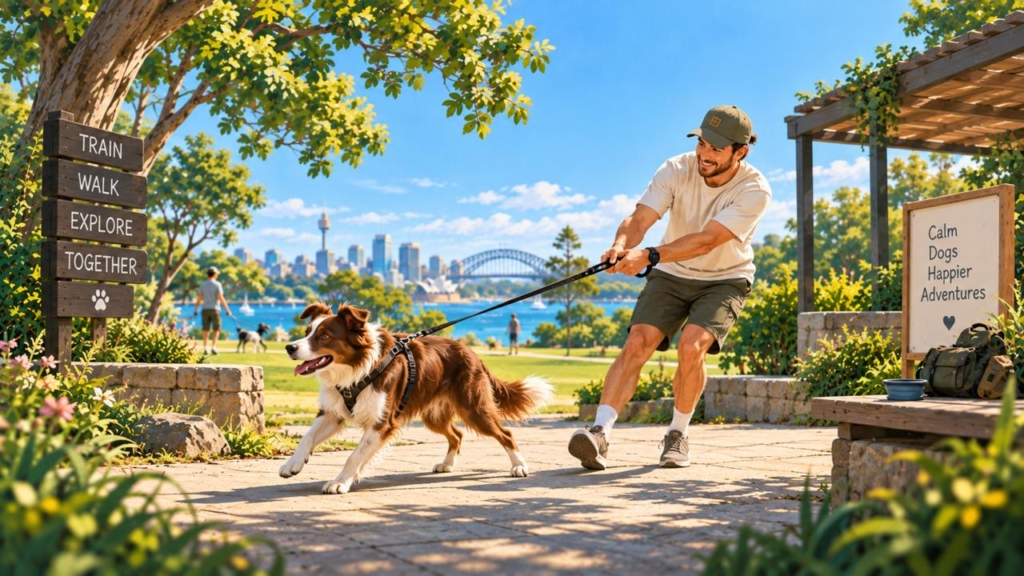


Lead pulling is the most common behavioural complaint among dog owners. Dogs pull because it has been rewarded: every time pulling got them to something interesting, the behaviour strengthened. Breaking the pattern requires consistent training that removes the reward for pulling and replaces it with a reward for loose lead.
This method works for most dogs within eight to twelve weeks. What matters is not how strong your dog is, but how consistent you are with the same response every single walk.
This article is for general information purposes only and does not constitute veterinary or professional advice. Every pet is different. If you have concerns about your pet’s health, behaviour, or wellbeing, consult a qualified veterinarian or other appropriate professional.
Why Do Dogs Pull on the Lead?
A dog pulls because something more interesting is happening ahead than behind them. The core reasons are straightforward once you recognise them.
Excitement and High Energy
Puppies and high-energy dogs pull because they haven’t yet learned to regulate themselves on lead. Their brain is saying “let’s go, let’s go, let’s go” and the lead is the only thing stopping them. Energy doesn’t mean bad behaviour, just untrained behaviour. A Border Collie or Labrador can appear unmanageable on lead not because they’re stubborn but because their drive is higher than their impulse control.
Natural Walking Pace Mismatch
Your dog’s natural walk is faster than yours. They’re not being disobedient when they pull, they’re just moving at their preferred pace. Once they’ve learned how to match your speed, lead work becomes easier for both of you.
Pulling Has Been Reinforced
This is the big one. If your dog pulled toward something in the past and got to do it, pulling was rewarded. Every unrewarded pull taught them that pulling works. That’s why it’s so hard to undo, and why consistency from day one matters so much.
Distraction and Arousal
A dog sees another dog, a jogger, a bird, a leaf blowing across the path. Arousal spikes, impulse control drops, and suddenly they’re at full extension on the lead. Reactive dogs or highly excitable dogs struggle more here, but all dogs get distracted.
Limited Lead Training
Some dogs have never been taught what a loose lead feels like or what behaviour gets rewarded on a walk. They’ve just been taken out and are expected to figure it out. Teaching them takes time, but it starts from zero.
What You’ll Need Before You Start
Most lead-pulling fixes work with standard gear. You need a lead that keeps your dog next to you, treats they actually want, and something to attach the lead to without choking them.
Lead and Collar Options
Choose equipment that gives you control without risking injury. Your options include:
- Standard collar and lead: Works well for small dogs and puppies. Not ideal if your dog is strong or pulling hard.
- Flat collar with a six-foot lead: Good for most sizes once training has started. Gives you a better response than a long lead.
- Harness: A well-fitted harness distributes pressure across the chest and shoulders rather than the neck. Some dogs respond better to harness training, especially strong or stubborn breeds.
- Head collar or gentle leader: Sits over the muzzle like a horse halter. Redirects the dog’s head when they pull, which naturally stops forward momentum. Not uncomfortable, but it takes time for dogs to accept. Not suitable for all dogs.
Do not use retractable leads while teaching loose-lead walking. Retractables encourage pulling because they teach your dog that tension propels them forward. A fixed six-foot lead is better.
Treats and Rewards for Training
Use small, soft treats that your dog can eat quickly during the walk. Nothing fancy is needed, but the treats must genuinely motivate your dog. Some dogs work for pieces of cheese or cooked chicken. Others prefer their regular kibble if you’re training during mealtime.
How to Teach Your Dog to Walk Without Pulling
The method is consistent across all dogs: reward loose lead, remove reward for pulling, and build up gradually. The difference between success and failure is doing it the same way every single time.
Start Somewhere Quiet
The first few weeks, forget the park. Train in your backyard, a quiet street, or an empty car park. Your dog needs to learn the basics without distractions from other dogs, joggers, or interesting smells. Once they’re solid with loose lead, you can gradually introduce busier environments.
Reward Attention and Loose Lead
The goal is simple: loose lead means good things happen. Every time your dog walks next to you with slack in the lead, they get a treat, praise, or both. This is where the training happens. You’re teaching them that being next to you is more rewarding than pulling ahead.
Use treats frequently at first. As your dog gets the idea, you can space them out. The pattern should feel obvious to your dog: I am next to my owner, lead is loose, good things happen.
Stop or Change Direction When Tension Appears
The moment you feel the lead tighten, stop walking. Don’t yank. Just stop. Your dog learns that pulling causes the walk to stop, which is the opposite of what they want. When they come back, and the lead loosens, you start walking again.
This approach works because it removes the reward for pulling. Your dog isn’t punished; they just don’t get what they wanted. After a few weeks of this, most dogs start thinking, “Pulling doesn’t get me anywhere, so I might as well walk next to my owner.”
Some owners change direction rather than stop. It’s equally effective. Turn around and walk the other way. Again, it teaches that pulling leads nowhere.
Increase Distractions Gradually
Once your dog walks well on a quiet street, take them somewhere a bit busier. Maybe a local park with other people but no dogs. Then a busier park. Build up slowly over weeks. Each time your dog manages a new environment on a loose lead, you’re cementing the behaviour.
This slow approach is where most people fail. They do two sessions in the backyard, think the problem is solved, take their dog to the off-lead park on a weekend, and lose all progress in one outing
Keep Sessions Short and Consistent
Training sessions don’t have to be long. Fifteen to twenty minutes of focused loose-lead training is more valuable than an hour of inconsistent walking. Train every day if possible. If someone else walks your dog, brief them on exactly what you’re doing so they don’t inadvertently reward pulling.
Consistency is not optional. One person rewarding pulling and another punishing it creates confusion. Everyone who walks the dog needs to follow the same rules.
Common Lead Training Mistakes
Most lead training fails not because the method is wrong, but because owners accidentally reward pulling or skip the gradual build-up. These are the patterns that derail progress.
Inconsistent Rules
If you let your dog pull sometimes but not at other times, they’ll keep testing to see which version of the rule is in effect. A dog pulled you to the cafe on Tuesday. Why not try again on Wednesday? Inconsistency teaches them that pulling might work, which keeps the behaviour alive. Rule in, rule in, always.
Moving to Busy Environments Too Quickly
Taking your dog from backyard training to a busy park in one jump sets them up to fail. They don’t have the skills yet. Build up step by step. This is not weakness; it’s training sense.
Sessions That Are Too Long
A dog loses focus after fifteen to twenty minutes. Beyond that, you’re just walking your dog around a park, not training. Short, focused sessions trump long, loose ones every time.
Punishment-Based Handling
Yelling at your dog, jerking the lead hard, or letting frustration drive the session damages trust and doesn’t teach what you actually want them to do. Punishment tells them not to pull when you’re angry. Reward tells them not to pull because it doesn’t work and loose lead is better.
What If Your Dog Only Pulls Around Other Dogs or People?
Lead pulling around other dogs is reactivity, not basic lead training. Arousal, excitement, fear, or frustration drives it, and each needs a different approach. General lead training doesn’t solve this alone.
Identifying What’s Driving the Pulling
Start by noticing what your dog actually does. Do they lunge forward to greet, back away in fear, or freeze and stare? The emotion underneath determines the fix. Excitement-based pulling looks like forward lunging and wagging. Fear-based pulling involves backing away, tucking, or freezing. Frustration-based pulling is jumping and spinning. You can’t train the right response if you’re treating all three the same way.
Training Excitement-Based Pulling
If your dog pulls toward other dogs or people because they want to greet them, early prevention works best. Create distance, reward your dog for looking at you or keeping a loose lead when another dog is visible, and build impulse control gradually. At first, this might mean crossing the street or stepping to the side every time another dog appears. As your dog improves, you can reduce the distance.
A dog walking trainer or personal dog trainer who specialises in this work can be useful here. They can see the signals in real time and adjust the distance or reward pattern on the spot.
Training Fear-Based or Reactive Pulling
If your dog pulls because they’re scared or reactive to other dogs, this isn’t a lead-training problem. It’s an anxiety or reactivity problem. You need a professional dog trainer who works specifically with fearful or reactive dogs. This is above-standard lead training and requires individualised assessment.
When to Get Help From a Professional Dog Trainer
Lead pulling usually responds to the training above. Sometimes it doesn’t, and that’s when a dog trainer should step in.
Signs You Need a Professional Dog Trainer
- Your dog pulls so hard you’re worried about injuring them or yourself
- They’re reactive to other dogs or people, and pulling is part of a bigger behaviour problem
- Your dog shows signs of fear, aggression, or severe anxiety on lead
- You’ve been consistent for eight weeks with no improvement
- You’re not sure if you’re doing the training correctly
A professional dog trainer should be qualified, ideally holding a Certificate III or IV in Animal Studies or equivalent. They should use positive reinforcement methods and never recommend harsh corrections. A good dog trainer works with you to understand your dog’s behaviour and teaches you how to train, rather than just training the dog for you.
A personal or private dog trainer can come to your home or meet you at a location your dog finds difficult. A dog walking trainer who works with clients on the actual walks can be especially useful for lead pulling because they’re addressing the behaviour where it happens.
FAQ
How long does it take to stop lead pulling?
Most dogs show improvement within two to four weeks of consistent training. Full solid loose-lead walking can take eight to twelve weeks, depending on your dog’s age, how long they’ve been pulling, and how consistent you are. Consistency matters more than time. Three weeks of perfect training beats three months of lazy work.
Should I stop walking when my dog pulls?
Yes. Stopping every time the lead tightens teaches your dog that pulling gets them nowhere. It’s the clearest way to say “this doesn’t work”. Patience here is the training tool.
Why does my dog walk well at home but pull outside?
Your dog has learned the rules in the backyard but hasn’t learned to apply them in a stimulating environment. This is normal. Lead training needs to happen in increasingly distracting places so they learn the rule holds everywhere, not just when nothing interesting is happening. Start with quiet streets, then busier ones, then parks.
Can an older dog learn loose-lead walking?
Yes. Dogs can learn at any age. Older dogs sometimes pick it up faster because they have more impulse control than puppies. The timeline is the same, but an adult dog may show progress faster. Consistency still matters most.