




Showing 1–12 of 103 businesses
Busy work schedules, errands, and holidays can get in the way of your dog’s regular routine. That’s why many people turn to doggy daycare to keep their dogs entertained and cared for even when life gets busy. These facilities allow your dog to be monitored and cared for while playing with a wide variety of other dogs. Since there are so many different daycare businesses for dogs across Australia, it can be difficult to find one suitable for you. To help you decide if daycare is right for your dog, you’ll first need to compare business types, locations, prices, and weekend availability to see if there’s an option near you that’s ideal for your canine companion.
Since there are so many different daycare businesses for dogs across Australia, it can be difficult to find one suitable for you. To help you decide if daycare is right for your dog, you’ll first need to compare business types, locations, prices, and weekend availability to see if there’s an option near you that’s ideal for your canine companion.
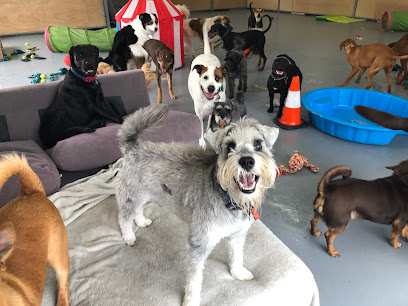
Doggy daycare refers to a place where you can drop your dog off for playtime under supervision. Most dog parents drop their dogs off for daycare on their way to work or when running errands, but some businesses may also provide overnight boarding.
These daycare businesses typically provide the following for your pup:
At home, your dog would be sitting alone feeling bored or lonely. Doggy daycare makes their time away from you a lot less lonesome. Dogs get to stick to their normal feeding schedule while engaging with other dogs, offering both physical and mental stimulation under staff supervision.
To help you get started on your search, here are some popular options across Australia:
Every daycare business operates differently, but the following are important aspects for most.
Some daycares have a specific drop-off window, typically between 6:30 and 9:30 am in Australia. Others allow dogs to come and go at any point throughout the day. When all the dogs are dropped off around the same time, it can be less chaotic since new dogs aren’t being added into the mix late. However, when there isn’t a drop-off window, that allows for more flexibility in the owners’ schedules.
Like drop-off, pick-up can occur either within a certain window or at any point throughout the day, depending on how the daycare operates. The dogs must be picked up before the staff need to go home, so you may be charged fees if you’re late. Most Australia daycares require dogs to be picked up between 4:30 and 6 pm and charge $10 to $35 if dogs are picked up late.
Safety is a priority for these businesses. Therefore, daycares hold temperament tests before dogs can join playgroups. A temperament check is an evaluation of how a dog behaves around groups of dogs. This typically starts with a calm one-on-one meeting with the staff, and then, they’ll introduce the dog to some of the calmer dogs. If the dog shows signs of stress, reactivity, or aggression, then they won’t be able to attend daycare.
In Australia, daycare businesses usually require an up-to-date C5 vaccination to ensure the safety of all dogs on the property. C5 vaccinations protect against Canine Distemper, Parvovirus, Adenovirus/Hepatitis, Parainfluenza, and Bordetella. You will need to show proof of vaccination every time your dog gets vaccinated so the facility can keep your dog’s records up to date.
Doggy daycare groups typically range from 10 to 20 dogs per staff member. It’s up to the business to decide the best way to divide up dogs. Most split groups based on size, temperament, energy level, and/or age. The staff may adjust groups based on which dogs get along the best.
Most daycares have structured naps where the dogs get some alone time in private pens. This is usually for an hour or two in the middle of the day. It gives the opportunity for dogs to nap or play with a toy after an eventful play group. While some dogs enjoy being in playgroups all day, many become overstimulated or exhausted without a break.
Each business follows a unique routine for drop-off, playtime, rest time, and pick-up. Choose a daycare that works for your schedule and your dog’s needs. If you’re looking for doggy daycare for puppies, daycare with smaller groups and more rest time will be best to help them get used to the daycare environment.
Doggy daycare is good for dogs, but only in the right situations. Every dog is different, so what’s good for one dog might not be beneficial for another. Since you know your dog best, it’s important for you to think about how your dog behaves around other dogs and whether their behaviours are ideal for a daycare setting.
Daycare is good if your dog:
Daycare might be bad if your dog:
Whether doggy daycare is good for dogs depends on if your dog will enjoy it. If your dog is always eager to play with other dogs, they will thrive at daycare. If your dog is skittish and uncertain, you might want to find a dogsitter with a low-stress environment instead.
Doggy daycare for puppies can be very beneficial once your dog is old enough to have all their vaccinations. Below are some things to consider when taking a puppy to daycare.
In the early stages of a dog’s life, small actions can have a big impact. If your puppy is left alone often with no entertainment, they could develop separation anxiety, destructive behaviours, and other concerns that persist even as they grow up. The right doggy daycare for puppies can help avoid these concerns by offering socialisation, a way to burn off energy, and a structured schedule even when you’re away.
While daycare can help a puppy develop, it’s important not to overdo it. Start with only a few sessions per week, preferably half-day visits instead of full-day ones if possible. Look for daycares that offer smaller groups and extra rest opportunities to ensure you don’t introduce too much to your puppy too quickly. If your puppy seems anxious and rowdy even after spending the day there, it might not be beneficial for them.
Like adult dogs, puppies also need a current C5 vaccination to attend daycare facilities. In Australia, puppies get three doses of the C5 vaccination: one at 6-8 weeks old, another at 10-12 weeks old, and a final one at 16-18 weeks old. Puppies aren’t fully protected until one to two weeks after the third dose, so many daycares won’t allow puppies before then.
Puppies typically nap 4 to 6 hours more per day than adult dogs because they need to recover from all their sudden energy bursts. Look for a daycare that’s willing to follow a strict nap schedule for your puppy. Ideally, your puppy should get naptime after every hour of playtime. Some daycares might let you request additional naptime for your puppy as needed.
In a well-monitored playgroup, puppies can become more confident. Since all the daycare dogs passed a temperament test, they’ll be more predictable and social than dogs you might encounter at the dog park or other public spaces. Sticking to a daycare that keeps groups small is the best way to help your pup socialise without feeling overwhelmed.
At a daycare, the dogs are always closely monitored. They’re typically divided up by dogs of a similar temperament, age, or size, so your puppy will likely be socialising with dogs they’ll get along with. If a staff member notices your puppy isn’t comfortable, they can remove them from the group as needed. At the end of the day, the employees can tell you about how your puppy behaved to help you learn the best ways to socialise them.
Doggy daycare prices can vary based on several factors, often costing anywhere from $30 to $95 per day. AAA Pet Resort (Mudgeeraba) and Northshore Pet Resort (Rothwell) fall on the more affordable end of the range while Field Days (Wollongong) and Dog Royalty (Coorparoo) are considered luxury options. Below are several factors that play a role in pricing.
Businesses in urban areas are usually more expensive because they have higher rent, wages, insurance, and operating costs compared to rural locations. Melbourne and Sydney are the most expensive cities in Australia, which is why chains like Kip charge more for locations in those areas.
On average, Australian cities cost around $50 to $85 per day while rural areas cost $30 to $65 per day. Search “cost of doggy daycare near me” to determine the precise pricing for your location.
Larger facilities typically charge less because they can accommodate more dogs at once. Smaller facilities have premium rates due to their limited capacity and individualised attention for each dog.
Many locations let dog owners choose between full days and half days to accommodate varying schedules. Full days will be more expensive, so consider half days if you’ll only be busy for a few hours. Half days generally cost between $35 and $55 in Australia while full days can cost anywhere from $45 to $95.
The number of staff per dog affects the costs because the facility needs to pay those employees. Less than ten dogs per employee will result in higher costs to make up for the extra personal attention. Facilities that have 10 to 20 dogs per employee can be more affordable because they don’t need as many people working at once.
Doggy daycare prices can go up if you add extras like transportation, overnight stays, grooming, training sessions, specialty treats, and enrichment activities. For example, Dog Royalty in Sydney is more expensive than most other businesses because they pick up and drop off every dog. Woofers Dog Lounge in Moorabbin offers local pick-up and drop-off for an additional $12.
If you’re looking for a daycare that also offers grooming services, consider Blooming Tails in Artarmon or Darlo Dogs in Darlinghurst. For training, consider Madame Ma’s Doggy Daycare in West Perth or Pawesome Academy in Arundel.
Most dog parents need weekday care due to work schedules, so those are the most common daycare hours. Daycares that offer weekend care might be more expensive or have different hours on Saturdays, Sundays, and holidays.
How much doggy daycare costs depends on the pricing structure you choose. Usually, you can either buy single-day passes or you can bundle several days. Packages are usually cheaper per day, but they’re only worth it if you’re certain your dog will attend daycare that many days.
For example, Gabba Doggy Daycare in Coorparoo is $10 cheaper per day with a 5-day pack and $15.50 cheaper per day with a 10-day pack. Dogs HQ operates similarly, offering a $6 discount per day with a 5-day pack and an $8 discount per day with a 10-day pack.
Since pricing can vary based on suburb, city, demand, and services, your location is a major factor for the cost of dog daycare. Searching “how much is doggy daycare near me?” can help you find local businesses so you can compare their costs.
New South Wales daycares cost between $35 and $95 per day, with businesses in Sydney being the most expensive.
Here are some prices for New South Wales daycares:
Victoria dog daycares typically cost $45 to $85 per day, with Melbourne daycares typically costing the most.
Here are some prices for Victoria daycares:
Queensland has a wide price range, costing anywhere from $30 to $85 per day for your canine companion.
Here are some dog daycare prices in Queensland:
Western Australia can cost $45 to $70 for a day at daycare, sometimes dipping below that for half day rates.
Here are some prices for Western Australia doggy daycares:
South Australia is generally more affordable than the above states, so doggy daycare is often $40 to $65 per day.
Here are some pet daycare prices in South Australia:
Australia’s smallest state can cost anywhere from $35 to $70 per day for dog daycare.
Here are some doggy daycare prices in Tasmania:
Not all daycares are open Saturdays, Sundays, and public holidays, but sometimes, your dog needs somewhere to go during shift work, long weekends, day trips, events, and emergencies. In those events, you’ll need to find a facility that operates seven days a week.
The average price for weekend daycare in Australia is $50 to $80 per day. Here are some daycare businesses that are open on weekends:
Weekend doggy daycare is especially beneficial for dogs who already visit the daycare during the week. Then, if something comes up on a weekend, your dog will have a familiar place to stay. For high-energy dogs, occasionally attending daycare on weekends can help them maintain structured exercise time away from home.
Sometimes, searching “doggy daycare near me” isn’t enough to narrow down your search. Daycares for dogs are becoming increasingly popular, so you may have a lot of options in your area. The best way to decide is to consider all the following when comparing your options.
Most doggy daycares in Australia run from 7 am to 6 pm Monday through Friday. Weekend hours are often shorter, opening around 8 am or 9 am and closing between 2 pm and 5 pm. Find a daycare with hours that fit your schedule.
A safe daycare environment should have required vaccinations, an initial temperament test, and a reasonable staff-to-dog ratio. Find out if they have specific procedures in place for weather-related safety, such as shaded outdoor areas and air-conditioned indoor spaces. If temperatures exceed 28℃, dogs should play indoors only. Before booking a day, take a tour of the facility to ensure it looks like a safe, welcoming place for your pup.
When researching a daycare, go beyond the company’s website and look at reviews from sources like Google. Hearing feedback from other pet owners can give you insight on real-life experiences at the establishment. Kip is a great example because their locations consistently have between 4.7 and 4.9 stars in Google.
The staff should be carefully trained on dog handling and dog behaviours before being left alone with playgroups. Some businesses may even require certain animal care certifications for staff. Daycares that have dog trainers on site can be safer and more structured.
Would you prefer your dog to be grouped with dogs of a similar size, temperament, or age? Every daycare splits up dogs a little differently, so find one that your dog will be most comfortable in. Some daycares even specialise in certain dogs, such as Darlo Dogs in Darlinghurst, which only takes small dogs, and Field Days in Wollongong, which only takes medium and large breeds.
When you walk into a facility, it shouldn’t smell strongly of harsh chemicals or urine. The business should be transparent about their cleaning procedures, including how often they disinfect play areas and what products they use.
The doggy daycare should have plans in place for various emergencies, such as attacks, medical concerns, and evacuations. Ask for details on these procedures beforehand, and if the staff seem uncertain, it might be best to book somewhere else.
Most daycares have both outdoor and indoor spaces for playgroups. Dogs should have limited time outdoors during hot days. When touring the facilities, make sure all fences are tall and secure. The flooring should be safe, comfortable, and easy to clean, such as artificial turf for outside and rubber flooring indoors. If you prefer your dog to be inside or outside for most of the day, find out if you can request that.
Find out how often the dogs get to rest. If the amount of rest time feels like too much or too little for your canine, find out if you can request a specific schedule for your dog. During the tour, ask to see where the dogs rest during the day.
Trial days, also known as temperament tests, are short sessions to see how your dog behaves around other dogs. Ideally, they should start with slow introductions with easy-going dogs before introducing your dog to larger groups. Find out how the daycare handles trials, along with what they look for in your dog’s behaviour. Daycares without strict temperament guidelines might not be safe for your dog.
Make sure you’re aware of all the terms and policies before signing your dog up. Familiarise yourself with pick-up and drop-off times, late fees, vaccination requirements, emergency procedures, and pricing. If something doesn’t feel right to you, look for a different daycare instead.
While you’re touring the facility or on the phone with the daycare, be sure to ask lots of questions. If your dog has any specific needs, make sure to bring them up before booking anything.
Here are some good questions to keep in mind:
Daycare should be a positive experience for your dog. If your dog has a good time at doggy daycare, they’ll display the following behaviours:
If the above aren’t true for your dog, they might be unhappy or uncomfortable at daycare. In that case, consider leaving them with a sitter or having someone stop by your home to check on them instead.
Australia has lots of wonderful dog daycare facilities for all types of budgets and lifestyles. Compare providers in your suburb and check safety policies and hours. Then, contact the most suitable business and book a trial day to see how your dog enjoys it. The goal is to find a convenient daycare that your dog will thrive at, so keep your dog’s unique personality in mind when making your decision.
Doggy daycare in Australia can cost anywhere from $35 to $90 per day. Longer days, urban locations, and smaller playgroups will have higher costs while rural areas, half days, and fewer employees will be more affordable.
Every day is usually too much for most dogs. Even extremely social dogs need time to relax and decompress. Visiting a few times per week is ideal for more dogs.
Yes, puppies can go to doggy daycare, but they must be fully vaccinated. Some facilities might only allow puppies of a certain age or older.
Yes, many canine daycares offer weekend services for pet parents with busy weekend plans. The hours and pricing for these services may differ from weekdays.
Location, number of staff, and services offered all affect pricing. Rural locations with fewer staff will be more affordable than urban locations with lots of employees. Adding on services like grooming, transportation, and overnight boarding will affect the cost as well.
Search for daycares near your location and compare all the options. Find one that’s conveniently located and within your budget while also matching your dog’s needs.
No, daycare isn’t ideal for anxious dogs. These facilities often have lots of energetic dogs in one room, which can be overwhelming for nervous pups. Even if groups are divided by energy levels, there are still lots of new sights and smells that anxious dogs might find scary.
