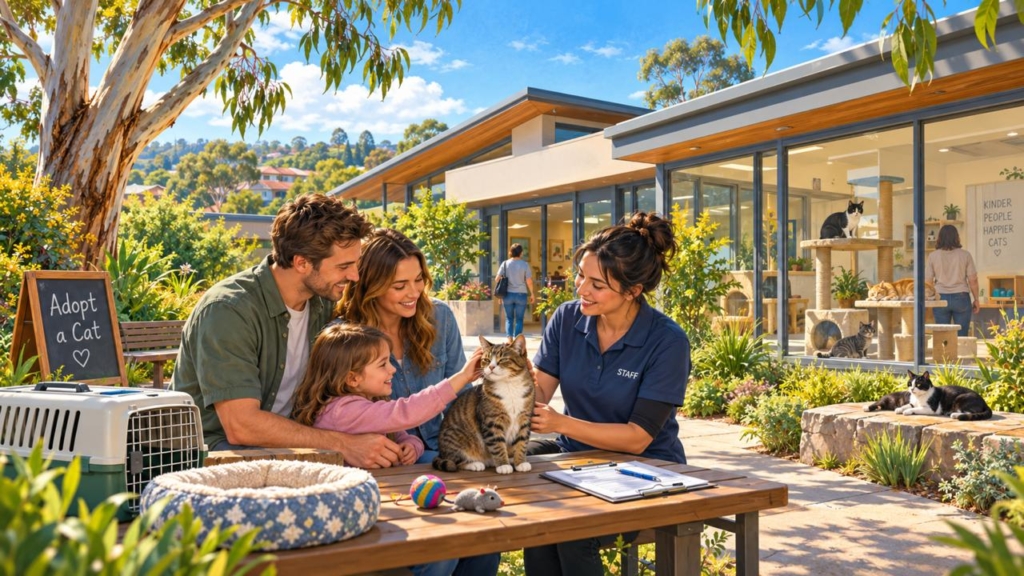


The process of cat adoption in Australia is simple: decide if you’re ready, find a cat through a shelter or rescue organisation, submit an application, meet the cat, get approved, and bring them home. The whole thing takes 1–3 weeks. Here’s how each step works and what to expect along the way.
This article is for general information purposes only and does not constitute veterinary or professional advice. Every pet is different. If you have concerns about your pet’s health, behaviour, or wellbeing, consult a qualified veterinarian or other appropriate professional.
Is Cat Adoption Right for You?
Adopting a cat is a genuine commitment. Before you start looking, be clear about whether your life and home can support one for the next 15–20 years.
Your lifestyle and the cat’s needs
Adopted cats need time to settle. If you travel for weeks at a time, work long, unpredictable hours, or are moving house frequently, adoption might not be the right time. Cats are territorial and sensitive to upheaval. Some bounce back quickly. Others shut down for months.
Housing considerations
Most adoption centres will ask about your living situation. Cats in flats need vertical space (shelves, cat trees, window perches) and enrichment. If you rent, confirm your lease allows pets and that you can modify the space safely. Outdoor access is a bonus but not essential. Cats do perfectly well indoors if the environment is designed for them.
Your current pets and family
How do your existing pets handle new arrivals? Some dogs accept cats easily. Others have a high prey drive. Adoption centres will ask about this honestly, and you should too. If you have young children, expect the adoption centre to match you with a calm, confident cat. Many will decline applications from families with very young kids, and that is not about being difficult. It is about matching the right cat to the right home.
The financial side
Adoption fees cover desexing, vaccinations, microchipping, and sometimes a health check. Expect to pay $50–$200 depending on the organisation and the cat’s age. Beyond the adoption fee, budget for an annual vet check ($200–$400), food, litter, and unexpected veterinary costs. Cats can live 20 years. The financial commitment is real.
Where to Find Cats for Adoption in Australia
Cats available for adoption come from a handful of sources. Where you look affects which cats you find and how thorough the support is.
Animal shelters and councils
Local council shelters and the RSPCA are the largest adoption networks. They take in cats from the community, strays, and surrenders. Shelters have strict intake procedures and behavioural assessments, so they generally know the cat’s temperament and health history fairly well. Waiting lists are common during the Christmas rush and school holidays.
Rescue organisations
Dedicated cat rescue groups (there are dozens across Australia) operate independently, often run by volunteers. They tend to have strong expertise in behavioural rehabilitation and matching cats to homes. Many specialise in senior cats, long-haired breeds, or cats with special needs. The quality of support is usually very high because these organisations are mission-driven.
Foster-based adoption networks
Some organisations keep adoptable cats in foster homes rather than shelters. This gives you more insight into the cat’s actual personality and behaviour in a home environment. You might learn how they react to dogs, whether they sleep on the bed, or if they are wary of new people. Foster networks create real portraits of each cat.
Online adoption platforms
Online adoption sites aggregate listings from shelters and rescue organisations in your state. Using an adoption site saves you from ringing around. You can filter by age, personality type, and location, then apply directly through the platform.
How Cat Adoption Works
The process from browsing to bringing your cat home typically takes 1–3 weeks. Understanding the steps means no surprises along the way.
Browsing and shortlisting
Start by looking at cats available for adoption in your area. Most organisations have photos and brief descriptions online. You might see “cat for adoption” listings with personality notes: “friendly and chatty”, “shy but warming up”, “independent but affectionate”. Read these carefully. They tell you what to expect.
The application
Once you find a cat you like, you will fill in an adoption application. Expect questions about your home, work situation, experience with cats, existing pets, and why you want to adopt. This is not bureaucracy for its own sake. Good organisations use applications to ensure a good match.
The conversation
Most adoption centres will call or email to discuss your answers. They might ask follow-up questions, suggest a different cat if they think yours would not be a good fit, or explain why a particular cat needs more of your time than you can give. Do not take this personally. The goal is to find the right match, not to fill a space.
Approval and meeting the cat
Once approved, you will meet the cat in person. This is your chance to observe how they interact with you, ask questions, and get a feel for their personality. If it is your first time seeing them, spend at least 15 minutes together in a quiet space. You will know fairly quickly if the connection is there.
The adoption agreement and microchip handover
You will sign an adoption agreement. This document outlines your responsibilities, the cat’s health status, any behavioural notes, and what support the organisation offers after adoption. The cat will be microchipped to you before you leave, and you will receive the microchip details and vet records.
Bringing your cat home
Take your cat home in a secure cat carrier. Have a safe settling space ready before you arrive (see the preparation section below). The journey home can be stressful, so keep travel time quiet and direct.
How Much Does Cat Adoption Cost?
Adoption fees vary by organisation and the cat’s age or health needs.
Standard adoption fees
Most shelters and rescue organisations charge $80–$180 for adult cat adoption. Senior cats are often cheaper, sometimes $40–$100, because adoption organisations want them rehomed before they become long-term residents. Kittens and younger cats might sit at the higher end.
What adoption fees include
Your fee typically covers desexing, vaccinations (usually at least first core vaccines), microchipping, and an initial health assessment by a vet. Some organisations include a free vet check after adoption. Check what is included before you adopt. If you are unsure, ask. There are no hidden costs if you ask first.
Free cat adoption
Occasionally, you will find cats listed for free adoption through community Facebook groups or Gumtree. Free cats usually come from private rehoming (someone giving up their own cat) rather than an organisation. The risk is higher due to limited information about health and history, and no formal support after adoption. It is possible but not the safest route. Adoption fees exist to ensure the cat has been properly vetted.
Kitten vs Adult vs Senior Cat Adoption
Each age group brings different realities. Choose based on your lifestyle, not just cuteness.
Adopting a kitten
Kittens need constant supervision for the first few weeks. They play at full volume, climb everything, and chew things that are not theirs. You will need to kitten-proof your home more rigorously than you would for an adult. Kittens bond quickly and settle faster than older cats. If you have time for play, training, and monitoring, kittens are rewarding. If you work long hours, they are not.
Adopting an adult cat
Most adult cats (1–8 years) have a known personality. You know whether they like other pets, how vocal they are, and whether they prefer lap time or independence. Adoption centres can match you accurately because they know the cat’s real temperament. Adult cats settle faster than kittens because their personality is already formed. They require less hands-on management and are often overlooked in favour of younger cats. Adopting an adult is a genuinely good choice.
Adopting a senior cat
Senior cats (9+ years) are often the calmest, quietest, and most grateful. They do not need to be trained. They are less likely to destroy things. They tend to settle into routines quickly. The only realistic downside is that their remaining time with you might be shorter than that of a younger cat. If you are prepared for potential health issues and vet costs in their later years, adopting a senior cat is deeply rewarding. Many rescue organisations even subsidise senior cat adoption to find them homes.
Questions to Ask an Adoption Centre
Before you commit, you need honest answers about the cat’s health and behaviour.
Health and medical history
- Is the cat desexed, vaccinated, and microchipped already?
- Are there any known health issues (dental disease, hyperthyroidism, kidney disease, allergies)?
- What vaccinations has the cat had, and when is the next booster due?
- Has the cat been tested for FIV or feline leukaemia (FeLV)?
- Is there a health guarantee or return clause if the cat becomes sick shortly after adoption?
Behaviour and personality
- How does the cat behave around new people?
- Is the cat comfortable being picked up and handled?
- How playful or independent is the cat?
- Are there any behavioural issues I should know about (aggression, excessive vocalisations, litter box issues)?
- How long has the cat been in the shelter or foster home, and how has it adjusted?
History and background
- Where did this cat come from (surrender, stray, or rescued from a situation)?
- How long has the cat been here?
- Have there been any incidents or concerns during their stay?
- If rehomed before, do you know why they came back?
Post-adoption support
- Will you help if the cat does not settle or there are behavioural issues after adoption?
- Can I contact you with questions in the first few weeks?
- Is there a return policy if the match does not work out?
What You’ll Need Before Bringing Your Cat Home
Have everything ready before your cat arrives. A prepared home means a calmer settling process.
Essential setup
- Litter box and litter (preferably the same brand the cat has been using, to avoid disruption)
- Food and water bowls (separate and away from the litter box)
- Cat food (ask the adoption centre what the cat has been eating; sudden changes cause digestive upset)
- A bed or safe resting spot
- A scratching post or scratching pad
- Toys and enrichment (tunnels, feather wands, balls)
- A small carrier or crate if needed for safe transport between rooms
Safe settling space
Designate one quiet room (bedroom, spare room, or office) as the cat’s initial settling space. This is where the cat stays for the first 3–7 days while they adjust. The room should contain their litter box, food and water, a bed, toys, and some hiding spots (a cardboard box, a cat tree, or a shelf). This containment prevents them from getting lost in a large house and gives them confidence as they explore gradually.
Safety checks
- Secure any loose wires or cables
- Remove toxic plants (lilies, azaleas, sago palms)
- Move cleaning products and medications out of reach
- Close off gaps under furniture where a frightened cat might hide permanently
- Consider a screen door if you want to keep the settling space partly visible without the cat wandering out
Helping an Adopted Cat Settle In
The first 1–4 weeks are critical. Your patience now pays off later.
Days 1–3: The cat’s pace
Your cat is overwhelmed. Everything is new. Do not force interaction. Leave them in their safe room with the door closed. Spend time near them quietly. If they hide, that is fine. It is normal. Provide food, water, and a clean litter box daily. Let the cat initiate contact. Some cats want attention immediately. Others need a week before they trust enough to come out.
Week 1–2: Gradual exploration
Once the cat seems calmer (eating well, using the litter box, coming out to explore), you can open the door and let them explore the house room by room. Keep supervision light. Do not chase or corner the cat if they are nervous. Let them find safe spots on their own. Some cats will check the whole house in an afternoon. Others take a week.
Weeks 2–4: Routine building
Establish predictable routines. Feed at the same time. Play at the same time. This creates security. The cat will start to relax and show their actual personality. If there are behavioural issues (litter box problems, aggression, excessive hiding), contact the adoption centre now. Many issues resolve with time and patience. Some need professional support.
Multi-pet introductions
If you have other pets, introduce them gradually. Dogs and cats do not need to meet on day one. Keep them separated for the first week, with the cat in their safe room. Let them smell each other under the door. Then use a baby gate or screen to let them see each other while separated. Only allow direct interaction once both animals seem calm. This takes patience but prevents stress and conflict.
Finding Cats for Adoption Near You
The easiest way to start is with platforms and organisations in your state.
Melbourne cat adoption
Local Melbourne rescues and the Victorian RSPCA have strong adoption programs. Many specialise in long-haired breeds or senior cats. Search for “cat adoption Melbourne” to find local options.
Perth cat adoption
Perth-based cat rescue groups work closely with the RSPCA Perth and local shelters. Adoption timelines are shorter during quieter seasons (May–September). Search “cat adoption Perth” to find available cats in your area.
Adelaide and other states
Every state has active rescue organisations and council shelters. Search “cat adoption [your suburb or state]” in your web browser to find local organisations. Most organisations list new animals within 24–48 hours of intake.
Frequently Asked Questions
How much does it cost to adopt a cat?
Most cat adoptions cost $80–$180. This covers desexing, vaccinations, microchipping, and a health check. Senior cat adoption is sometimes cheaper, between $40–$100.
Can you adopt a cat for free?
Free cats occasionally appear in community Facebook groups or online classifieds. The risk is less information about health and behaviour, and no formal support if things do not work out. Adoption fees exist to ensure proper vetting.
Where can I adopt a cat?
You can adopt from animal shelters, RSPCA branches, dedicated cat rescue organisations, foster-based networks, and online adoption platforms. Search “cat adoption near me” or visit your local council shelter or RSPCA website to start.
Is it better to adopt a kitten or adult cat?
Kittens are higher energy and need more supervision. Adult cats (1–8 years) have known personalities and settle faster. Senior cats are often calm and overlooked. Choose based on the time and energy you have, not just preference. Adopting adult and senior cats often yields better real-world outcomes than adopting kittens.