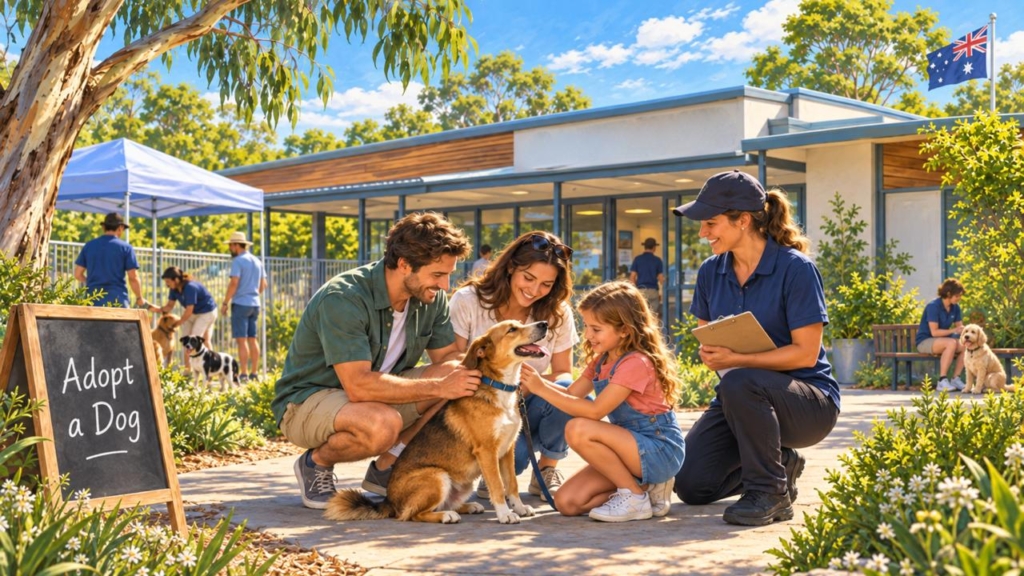


To adopt a dog in Australia, start by searching for available dogs through shelters, rescue organisations, or breed-specific rescues. Complete an application, meet the dog in person, and if approved, sign an adoption agreement and pay the adoption fee.
In this article, you’ll find answers to: Is adoption right for you? Where do you find adoptable dogs? What’s the step-by-step application process? What should you prepare at home? How do you help your dog adjust? And what support services might help after adoption?
This article is for general information purposes only and does not constitute veterinary or professional advice. Every pet is different. If you have concerns about your pet’s health, behaviour, or wellbeing, consult a qualified veterinarian or other appropriate professional.
Is Dog Adoption Right for You?
Adopting a dog requires honesty about your life right now. This section helps you recognise whether adoption fits, not to discourage you, but to set expectations that lead to successful outcomes.
Time and Routine
An adopted dog needs consistency for at least the first month. You’ll need time for daily walks, training, and simply being present while they settle. Dogs coming from shelters or rescue organisations often carry stress from the uncertainty, and routine helps them reset. If your work pattern changes week to week or you travel regularly, delayed adoption might work better than rushing in now.
Housing and Landlord Rules
Renters can absolutely adopt, but check your lease first. Many landlords require written consent for pets, and some shelters ask for a landlord reference. Homeowners benefit from having a secure yard, but it is not essential if you’re committed to exercise and training.
Existing Pets and Children
Shelters and rescue organisations perform compatibility checks before letting a dog go home. They will ask directly about children’s ages and other animals. Some dogs do brilliantly with families; others do better in quieter homes. Honesty here makes the process faster and the outcome more solid.
Cost and Long-Term Commitment
Adoption fees are genuinely affordable compared to purchasing, but ongoing care costs money. Food, annual vet visits, vaccinations, desexing, and emergency care add up. A dog also lives 10 to 15 years. Adopting is committing to that timeframe.
Long-Term Commitment
Dog ownership is a decade-long commitment. Your life will change, and your dog needs to fit into those changes or come along for the ride. That is the real question, not the adoption process itself.
Where Can You Adopt a Dog in Australia?
Dogs for adoption in Australia come from four main sources. Each has a different pace, selection process, and philosophy.
Shelters and Local Councils
Council pounds and large animal shelters like the RSPCA hold dogs from various backgrounds. They process paperwork quickly compared to some rescue groups, often completing adoption within a week or two. Selection is broad, so you might not find the exact dog you pictured, but many adoptable dogs pass through here first.
Rescue Organisations
Rescue groups focus specifically on dog rescue. They assess temperament closely, provide detailed history where known, and often foster dogs before adoption so they understand behaviour outside a shelter setting. The process is more thorough, which means slightly longer waits but stronger confidence in compatibility.
Breed-Specific Rescues
If you have your heart set on a Cavoodle, Border Collie, or Labrador, breed-specific rescues specialise in those dogs. They understand breed-specific traits, potential health concerns, and typical behaviour patterns. Wait times can be longer, but the match is usually very targeted.
Foster-Based Rescues
Some rescue organisations keep dogs in foster homes instead of kennels. The dog is already living in a home environment when you meet them, so you learn how they actually behave around furniture, doorways, and daily routines. This type of adoption often takes longer, but the foster carer can answer incredibly detailed questions.
How the Dog Adoption Process Usually Works
Most dog adoption in Australia follows a similar structure, though each organisation adds its own steps. Knowing this flow means fewer surprises.
Step 1: Search and Browse
Start with your council’s pound website, state-based rescue networks, or national sites like Petrescue or Adopt a Pet. Filter by size, age, energy level, and what you know about your home. Make a shortlist of dogs that fit your situation.
Step 2: Application
Most shelters and rescue organisations ask you to complete a form before you visit. This covers your home setup, other animals, work situation, and experience with dogs. It is not judgement; it is matching. An organisation might tell you honestly that a particular dog would not suit your life, and that’s actually helpful.
Step 3: Meet the Dog
If your application passes, you’ll visit to meet the dog in person. Bring family members who will live with the dog. Spend time in a meeting room or on a walk. Pay attention to how the dog responds to you and your surroundings.
Step 4: Checks and References
Some rescue organisations request a landlord or vet reference, especially if you are renting or have owned pets before. Larger shelters may do a home visit before finalising adoption. This protects the dog’s welfare and ensures the adoption will succeed.
Step 5: Approval and Adoption Fee
Once approved, you’ll pay an adoption fee (usually $150 to $400, depending on the organisation and the dog’s age) and sign an adoption agreement. This agreement protects the dog, specifying that if circumstances change, the dog returns to the organisation rather than ending up back on the street.
Step 6: Taking the Dog Home
You’ll leave with your adopted dog, often with paperwork about their known history, health records, microchip details, and vaccinations. Ask for specific advice about their behaviour during the first week at home.
How Much Does It Cost to Adopt a Dog?
Adoption fees are far lower than those charged by breeders, but they are not “free.” Fees typically cover veterinary health checks, microchipping, desexing, initial vaccinations, and the organisation’s costs of caring for the dog while it waits for adoption.
Typical Fee Range
Adoption fees in Australia usually range from $150 to $400, depending on the dog’s age and the organisation. Puppies and young adult dogs cost more; senior dogs often cost less. Some rescues offer reduced fees for senior adoptions to encourage homes for older dogs.
What the Fee Usually Covers
- Microchipping and registration
- Desexing (or certificate if already done)
- Vaccination and health check
- Parasite treatment
- Organisation’s care and assessment costs
What Is Not Included
Ongoing food, training, grooming, and veterinary care are your responsibility from day one.
Questions to Ask Before Adopting
Before you commit, ask the shelter or rescue organisation these questions. Good organisations welcome them.
About the Dog’s History
- What is their background? Stray, owner surrender, or other rescue transfer?
- How long have they been with your organisation?
- Any known trauma or difficult experiences?
- Previous living situation (family, single owner, multiple dogs)?
About Behaviour and Temperament
- How do they behave on leads and around other dogs?
- Any food guarding, anxiety, or reactivity observed?
- How do they respond to children or cats?
- Toilet training status and any accidents indoors?
- How do they react to loud noises or new environments?
About Exercise and Training Needs
- Daily exercise requirement (hours and intensity)?
- Training level or obedience knowledge?
- Destructive behaviours when left alone?
- Lead manners and recall?
About Health
- Any known health issues or medication?
- Desexing and vaccination status?
- Microchip number and registration?
- Age estimation (if exact age is unknown)?
About Adjustment
- Typical decompression timeline for dogs from your organisation?
- Any behaviour that might emerge after settling?
- Support available if adjustment is rocky?
Preparing Your Home for an Adopted Dog
A new adopted dog needs a simple, low-pressure environment for the first week or two. They are adjusting to your smells, sounds, and routines. Preparation takes a day or two.
Inside Your Home
- Designate a quiet space where the dog can retreat (a bedroom corner, laundry, or crate).
- Set up food and water bowls away from the main activity area.
- Have a lead and collar in a size that fits.
- Stock appropriate dog food (ask the shelter what they’ve been feeding).
- Gather any toys or bedding from the shelter if the organisation offers them.
In Your Yard
- Check fences are secure and gaps are closed.
- Remove toxic plants (lilies, sago palms, chocolate plants, and others).
- Provide a shaded area and water access.
- Remove hazards like sharp objects, garden chemicals, and loose debris.
Before They Arrive
- Arrange time off work for at least the first few days.
- Prepare family members for adjustment behaviour (some adopted dogs are quiet or withdrawn initially).
- Have your vet’s contact details saved.
The First Few Days and Weeks
The first days are about decompression, not adventure. Adopted dogs often experience a phenomenon called “two-week shutdown,” where they are quieter and more reserved than they will eventually be. This is normal and actually healthy. They are processing their new reality.
Days One to Three
Keep activity low. Toilet breaks and short, quiet walks only. Let the dog sleep in their designated safe space. Avoid visitors, loud activities, and social outings. Introduce family members one at a time if possible.
Week Two
Gradually extend the routine. Introduce short play sessions, slightly longer walks, and basic household sounds. Start toilet training if needed. By the end of week two, the dog usually starts showing personality and confidence.
Weeks Three to Eight
This is when behaviour emerges. A dog who seemed anxious might reveal they are actually confident. A quiet dog might become playful. Their true temperament takes weeks to surface. If significant issues arise, contact a professional dog trainer early. Early intervention prevents problems becoming ingrained.
Services You May Need After Adoption
Depending on the dog’s background and your situation, you might benefit from professional support.
Dog Training
If your adopted dog has lead manners to work on, recall that needs building, or anxiety to address, a professional dog trainer can assess behaviour and create a plan. Most trainers offer both group classes and one-on-one sessions.
Dog Grooming
Adopted dogs often arrive matted or neglected. A professional dog groomer can reset their coat, bathe them properly, and nail-trim them during those early weeks when they’re still adjusting. This also gives them a positive experience with hands-on care.
Dog Boarding or Dog Sitters
Once your adopted dog is settled (usually after four to six weeks), you might need care for when you travel or work full days. Professional dog sitters and dog boarding services provide peace of mind.
Puppy School or Socialisation Classes
If you’ve adopted a puppy or young dog, group socialisation classes under professional supervision build confidence and manners. This is different from training and focuses on positive exposure.
Frequently Asked Questions
Is adopting a dog free in Australia?
No. Adoption fees range from $150 to $400 and cover health checks, microchipping, desexing, and vaccination. The dog’s ongoing care costs money from day one.
What documents might you need?
Shelters typically provide microchip details, vaccination records, desexing certificates, and the adoption agreement. Renters should have landlord permission in writing. Some organisations request veterinary references.
Can renters adopt dogs?
Yes. Many adoptable dogs go to renters. Check your lease for pet clauses and get written landlord permission before applying for adoption.
How long can adoption take?
Simple adoptions through councils or large shelters can be completed within a week. Rescue organisations often take two to four weeks for full assessment and processing. Breed-specific rescues might have waiting lists of several months.
Can you adopt a puppy?
Yes, though puppies are less common in rescue than adult dogs. Some shelters hold young dogs; breed-specific rescues occasionally have litters. Expect longer waits and potentially higher adoption fees for puppies.